
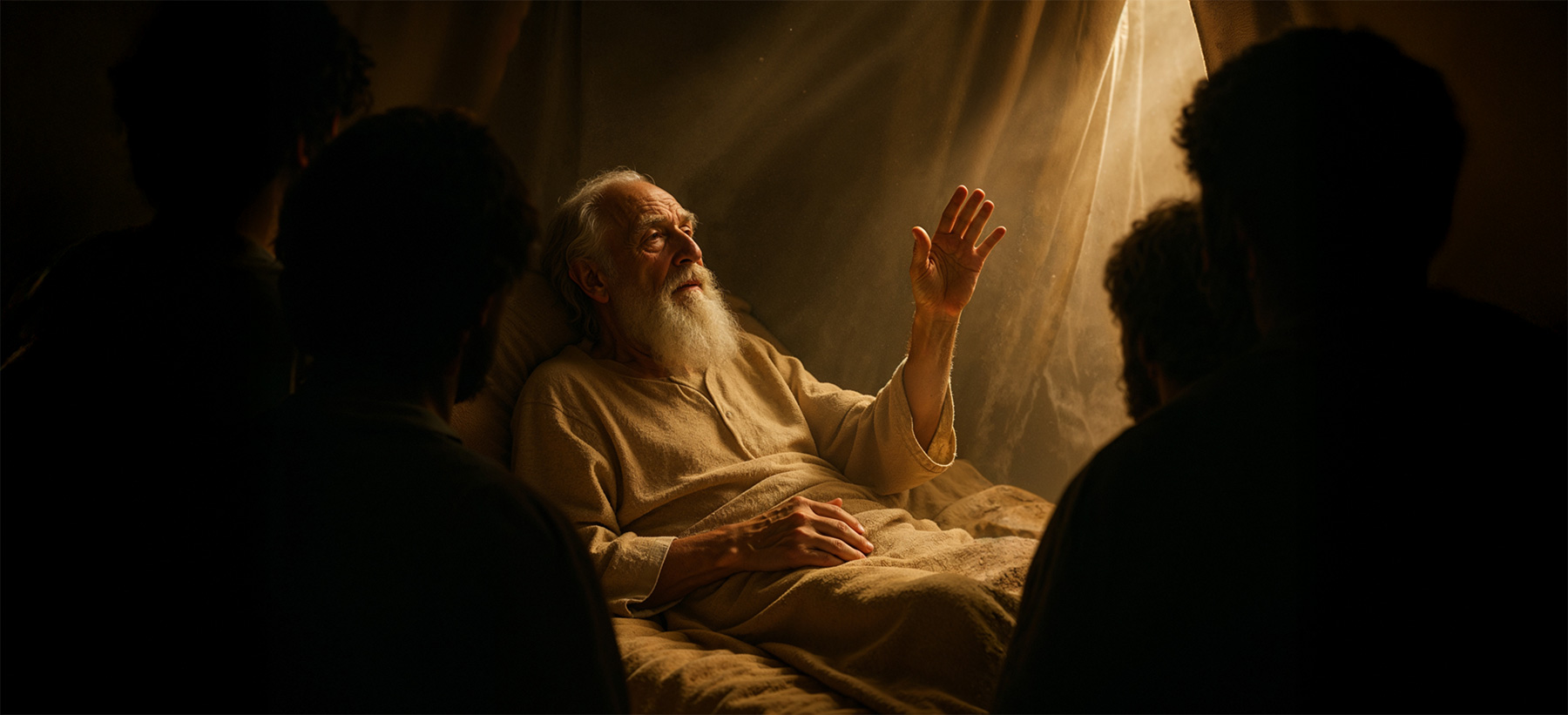
Jacob’s Blessings (Part One):
When Character Shapes Destiny
Have you ever read a passage of Scripture and thought, What does this even mean—and what does it have to do with me?
I’ve read Genesis many times. It’s full of fascinating, flawed, deeply human people. Yet these are the exact people God chose to reveal Himself through, ultimately blessing the entire world.
Genesis ends with Jacob—grandson of Abraham, son of Isaac—speaking prophetic words over his twelve sons. At first glance, his final blessings and rebukes can feel mysterious. But they are anything but random.
They reveal a powerful truth: Character matters more than position.
In ancient cultures, birth order determined privilege and inheritance. Yet Jacob completely disrupted expectations here. He didn’t bless them by age. His unique sequence tells a specific story—destiny is shaped by character, not status.
Today, in part one of this series, we will explore the first six sons of Jacob and uncover the life-shifting applications hidden in each tribe. Here is what stood out to me.
Reuben: When Potential Is Undermined by Instability
“Reuben, you are my firstborn, my might, the first sign of my strength, excelling in honor, excelling in power. Turbulent as the waters, you will no longer excel…” (Genesis 49:3–4, NIV)
 Reuben had everything going for him. Strength. Status. Birthright. But instability cost him everything.
Out of jealousy and lust, he slept with his father’s concubine (Genesis 35:22). That impulsive act forfeited his inheritance. His life is a sobering reminder that talent can get you to the top, but it takes character to stay there.
- Guard your consistency. Talent might build a platform, but only stable character can sustain it.
- Master your impulses. Do not let temporary desires ruin permanent blessings.
- Protect your potential. Small, unchecked compromise can derail your biggest life callings.
Simeon: The Warning of Fading Out
“Simeon and Levi are brothers—their swords are weapons of violence. Let me not enter their council… Cursed be their anger, so fierce, and their fury, so cruel! I will scatter them in Jacob and disperse them in Israel.”(Genesis 49:5–7, NIV)
 When their sister Dinah was violated (Genesis 34), Simeon and Levi responded with deception and mass slaughter. Their anger felt justified—but it spiraled into cruelty.
Because of this, Jacob prophesied they would be scattered. Historically, Simeon’s tribe never received its own strong territory; it was absorbed directly into Judah and slowly lost its unique identity.
- Refuse to stay stuck. Unaddressed bitterness can slowly diminish your influence and cause you to lose your way.
- Check your circle. Surrounding yourself only with people who feed your anger will accelerate your decline.
- Guard your inheritance. Do not let unresolved emotional patterns quiet your future potential.
Levi: The Beauty of Redeemed Pain
 While Levi shared Simeon’s curse of being “scattered,” their story takes a radical turn. Generations later during the golden calf crisis, the Levites chose to stand up for God (Exodus 32).
Because of their obedience, God redeemed their scattering. Instead of a punishment, being scattered became a badge of honor. They became the priesthood, scattered across all of Israel to minister to the people.
- Trust God with your brokenness. God specializes in turning past consequences into future callings.
- Choose a new direction. Your family history or past mistakes do not have to dictate your future obedience.
- Serve through your scars. God can use your redeemed failures to minister deeply to the needs of others.
Judah: From Failure to Leadership
“The scepter will not depart from Judah, nor the ruler’s staff from between his feet, until he to whom it belongs shall come and the obedience of the nations shall be his.” (Genesis 49:10, NIV)
 Judah’s story is one of profound redemption. His name means Praise (Genesis 29:35), and from his line would come Israel’s kings—including David—and ultimately Jesus Christ.
Jacob’s words hint at something far bigger than political rule. The phrase pointing to the one “to whom it belongs” (historically known as Shiloh) points directly to the Messiah. Jesus established a different kind of kingdom—one marked not by earthly conquest, but by an everlasting covenant.
- Embrace your redemption. Your messy past cannot stop God from using your future.
- Lead with humility. Real leadership focuses on serving others rather than ruling them.
- Keep looking forward. Praise is powerful because it focuses on God’s future promises.
Dan: Justice, Cunning — and Compromise
“Dan will provide justice for his people as one of the tribes of Israel. Dan will be a snake by the roadside, a viper along the path…” (Genesis 49:16–17, NIV)
 Dan’s tribe produced Samson, a judge who dealt powerful blows to Israel’s enemies (Judges 15–16). Though small, the tribe was fierce and strategic.
Yet Dan also became notorious for introducing institutional idolatry to Israel (Judges 18), leading to a massive spiritual decline. Interestingly, Jacob ends Dan’s prophecy by crying out, “I look for your deliverance, Lord.” Even in the face of compromise, hope remains.
- Stay spiritually vigilant. Physical strength can never replace daily, active spiritual faithfulness.
- Resist cultural compromise. Guard your heart against the subtle idols of modern society.
- Lean on salvation. Even when you feel yourself slipping, God’s rescue is always near.
Naphtali: Freedom and Fruitfulness
“Naphtali is a doe set free that bears beautiful fawns.” (Genesis 49:21, NIV)
 Some translations render this as “he gives beautiful words.” Either way, the imagery centers on grace, swiftness, freedom, and fruitfulness.
Despite humble beginnings, Naphtali’s tribe grew to become a significant, peaceful presence in Israel’s history. Generations later, Jesus would echo this exact picture of freedom: “So if the Son sets you free, you will be free indeed” (John 8:36).
- Walk in true freedom. Real liberty breaks old chains so you can flourish fully.
- Speak life-giving words. Use your voice to bring grace, peace, and beauty to others.
- Flourish where you are planted. God can turn humble beginnings into an incredibly fruitful life.
Why This Matters
Jacob’s final words weren’t just ancient predictions. They were a profound revelation of how our daily choices shape our lasting legacy:
- Reuben shows us how instability forfeits blessing.
- Simeon warns us that unchecked anger leads to fading out.
- Levi reveals how radical obedience can redeem a broken past.
- Judah reveals the beauty of redemption and Christ’s ultimate authority.
- Dan cautions us against quiet, cultural compromise.
- Naphtali reminds us that true freedom always leads to fruitfulness.
All of these threads tie back to God’s massive covenant with Abraham—a promise that through his descendants, all nations would be blessed. Through this exact lineage came Jesus, offering us redemption, forgiveness, and eternal life today. These ancient words still speak, and if we let them, they will still shape us.
Join the Conversation
We’ve looked at the first six sons today, and I want to hear from you!
Which of their stories hit closest to home? Did you relate to Reuben’s struggle with consistency, Simeon’s battle with anger, Levi’s story of redemption, Judah’s road to recovery, Dan’s warning against compromise, or Naphtali’s gift of freedom?
Drop a comment below and let’s talk about it!
This concludes Part One of Jacob’s blessings. Part Two is coming soon. Thank you for reading, and may the Word continue to reveal wisdom, truth, and freedom in your life.
Blessings,
Nancy
Stay tuned.








Recent Comments